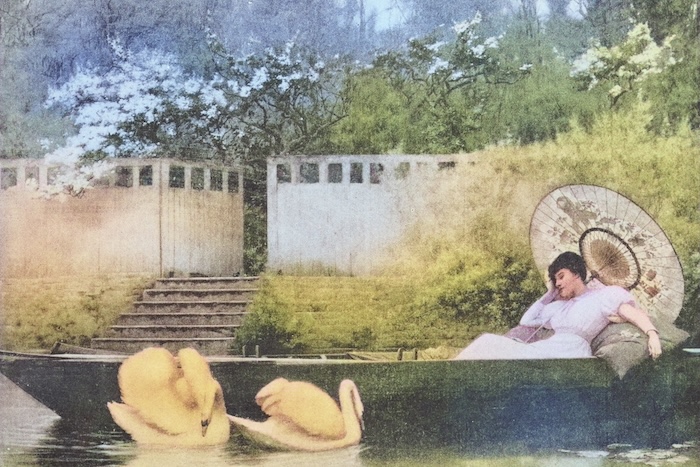
“A Perfect Peach” and “Now The Stars Hide”

Picture a perfect peach, / with color both subtle / and bold, a shape perfect / to behold, and a taste / like Heaven foretold… | I grew up in the countryside / on a farm with the nearest / neighbor a quarter mile away. / Every night the stars shone, / unreachable precious jewels / adorning eternity—and I felt / very, very small and yet, / strangely, also very, very old / and more, oh so much more / than my daytime self drunk / on the petty and the mundane.

“Coltrane on Soprano” and “Driving in the Highlands”

His / eyes are / so closed / they're op / en. From the / top of his he / ad, he sees the / music coming / at him eleven / notes at a time. / He must squee / ze them all thro / ugh this narrow / tongue flick of a / horn, this squeal / er, whiner, sopra / no, diva of a high / pitched saxophone. / Flurries of fingere / d-key-fingers indis / tinguishable from eac / h other, strike the honey / from the stone. O, blurry pain / and slurry sorrow suck the merci / ful marrow from this brass-gold bone.

“Poinsettias” and “Woody Guthrie”

I know you needed many / hours of darkness / to bloom / you burned for us / in place of / sun and usually / you’ll re-green / then wither, but you’ll / come back / in another year / if you are fed / right intervals of night / is the brevity / of your splendor worth / the blindness / of your hunger? / I think of all my friends

“I climb over my sleeping boyfriend to check for fires” and “Dialectics”

and I stare at the stove I have not touched in months / all because of a fleeting thought that maybe / my roommate forgot to lower the flame or that I ambled / over in some Klonopin-driven haze / to drowsily turn the knob myself. I allow a laugh / to leak through clenched teeth—this worry of mine is unfinished / until it infects all that’s important. Until I become convinced / that my apartment will crumble despite a foundation / that has outlived Presidents. / A friend told me there isn’t a thought I haven’t thought / to death. He said: I ought to learn / that only books are bound to last.

“Quarry Club Sunset” and “Ode to Pteromerhanophobia”

Word like a dirt packed mouth, / tongue forced strike of roof in gasp, / throat impinged in resonance akin / to being buried alive: / Pteromerhanophobia. / Name as fitting as fear, chemicals / rush right past frayed nerve to terror— / There is no escaping an hour. / Who doesn’t watch birds stretch wing / and yearn to fly? Pity of a fear, really, / world gathered up in pleats and yet, / Everywhere is possible but my mind. / I do it anyway. / Walk through the terminal upright. / Like guaranteed, all semi-composure / until I lose earth again and must await / its return.

“The Deer Come Down From the Mountains” and “Small Stack of Books”

When storms approach, the deer / come down / from the mountains. They stand in / people’s yards, they walk / through the Chevron station. / The deer look childlike and / amateurish, ears twitching / in the public park. / Gangs of them, five or six or seven, / they sniff the air, how do / they know the blizzard is coming? / Who among them / lives long enough to know the path / to safety? / The locals barely notice, avoid hitting / them with their cars.

“Thanksgiving Turkey” and “Madame X’s Lesson”

As Nassim Taleb had it, waiting for the ax, / a man stretching past the farthest tendrils of his ken, / lovers of liars, stargazers in the war, / candles burning bright and so on. / The truth is that we pity the Thanksgiving Turkey not for the ax / but for the easy life before it, / or not the ease exactly but the haplessness
of livestock, / fenced off from meaning, / a cave life, / perhaps seeing truth for the first time / in the specular shine of an ax already / night skied with the blood of her sisters, / when on a November day, amid the colors, / the turkey in fact learns that the past was prelapsarian . . .

“Astronomy” and “Carousel Animals Before Restoration”

Moonrise over ocean horizon. My father / teaches me to shoot / photos through a telescope, craters and ridges / rise like pockmarked skin / beneath a fluorescent light. This was now. I loved / the night lilies. The tigers, too, / that grew in my father’s garden, the way / something was always / awake, waiting. / I gathered worms and black swimming beetles / from the backyard pool / into jars of water. Look at them dance! I told him. / They’re carnivores, he informed me. / What did I know / about cruelty then, how accidental it could be?

“The Cost of Thought” and “Departure Gate”

What I find / speared / on my fork is not / what was on my plate. / I fear / there’s been a mistake, / a miscalculation. / Each morning / I fast-walk / past camouflaged shelters / where / yesterday’s heroes hide from us. / In a better world / I would fall up / to meet this sweet rain / halfway. | Airports are where belief in progress still survives. / Everyone queues for a miracle: / transformation by departure. / The body submits to metal detectors, / the soul to delay. / Screens whisper your name in code. / You move when they tell you— / toward light, toward air.

“The Old West” and “Black Canyon Night”

Looking at her hair dancing / in the wind, you felt promise / in the place and all its dream / palaces. Your new name in / waves on the sand, a peaceful / easy feeling. Post-Nixon / vibes from the rocky brown cliffs / pinched by houses on stilts, a / coast that washed away all the / impostor selves. Rolling on / the 10, your wrist on the wheel . . . / just 20 minutes to the / Tar Pits then. Or maybe you’d / take Sunset: made warm / by the generous and unbroken / light, you’d fly past cottages / roofed in Spanish tile nuzzling / the hills that curved up . . .

“Flowers for Edith” and “Where There is Only Sound and Light”

The tittering biddies in town / walked along State Street whispering, / That’s where she lives. All alone in that big house.
/ Terribly strange. Never married, of course. / Maybe Edith had that comical indifference in the 1940s. / I saw it once in my great-aunt Ida after Holy Communion. / In her Sunday best, she laid on the horn and flipped off / parents blocking the street for photographs. / Maybe Edith strode downtown with revered elegance— / kitten heels matching a taffeta clutch,
/ making small talk with town eccentrics / before meeting up with the gals at the Opera House.

“Fish, Stone, River, O” and “The Long Way In”

Inside the mother’s mouth was a fish, and inside the fish / was a grandmother’s wedding ring. You’d always believed / that the mother was a rock on the neck of a river. / That grandmother had been here is clear, / what is the flow crashing into now? / A stone mother sitting at the neck of a stream. / Who would have imagined a mother as stone, / a lode, a burden, a way, a course. / A stone mother sitting at the neck of a stream, / what wants the child? Only what was promised to her. / The child had been promised a lode, a burden, a way, a course, / something to be followed, a strong drink. / And most of all, her grandmother.

“Bellies”: A Lyric Essay

My family lore is a photograph I took as a young boy — the first artistic artifact — which still bobs in my mind like a mackerel with a ripped bladder. I took it on a Kodak, one of those late-90s digital cameras where the screen had a broken line running down the middle. I posed my uncle, grandfather, and father outside on the driveway. It is summer. My uncle and grandfather almost never come to North Carolina. I am a tiny boy with a bad bowl cut and a lisp. I do not know these men. I assume I ordered arms around waists, not concerned about the hundred degree heat and barked at them to smile.

“Pink Toenails” and “Crowd”

In the apartment with the / windows facing / the bright white church, cross and / solitary steeple, he wakes and makes a / bed that’s too small and yet too big / for the two of them, him and her, / in a city where she’s at home / and he’s not. / When she visits / he reads to her; / she cuts his / toenails, / paints them pink / reads chapters from his books, / calls him “Maestro” and / “An American Master.” / Not the first time / he has heard such comments. / Is she conning him? And is he / conning her when he says / “I love you” and / “You’re beautiful.”

“Rural adventure II” and “After the Storm”

I’d like to milk a goat / one day, you said. / Well, how about now? The weather / is fine, a sort of deep comprehensibility / about it. Italy / sinks beneath the / waters and another country / starts moving / upwards. It’ll be too late / soon, mother / will return with / her kitten army, her conversation – / ‘eat the tomato, / eat the potato…’ There’s no end / to a mother’s beliefs. They run along beside you / like children in a movie / planning some / enormous farewell.