

The Power of Art in the AI Age: On 21st-Century Painting and the Backlash Against the Thinking Machines

Once upon a time, only artists could take selfies. It took years of effort to earn the ability to transcribe reality. Artists observed figure models to draw people accurately, and the readiest option was their own reflection. A self-portrait was both a tool and a visage recorded for posterity, revealing how the artist saw herself under prolonged observation, expressed through talents that she devoted her life to cultivating. When you look into the eyes of a self-portrait, you see the part of an artist’s soul that she tried to preserve ahead of death. This is why so many artists have posed themselves with memento mori such as human skulls.
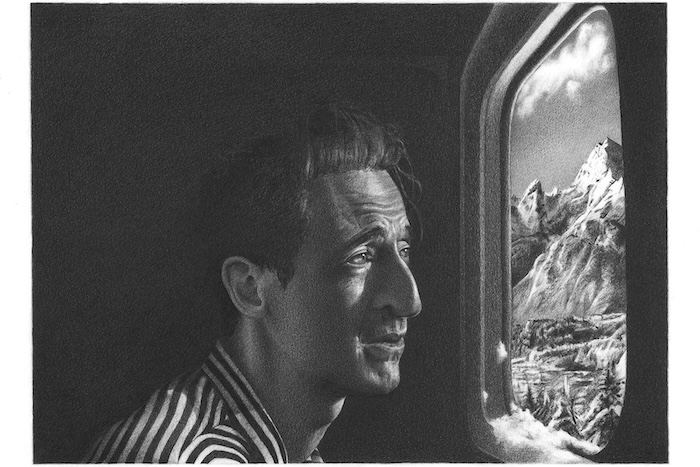
Architecting a Myth: On the Brutalism of The Brutalist

I wonder if László Tóth escaped the Nazis by jumping out of a prison transport train? Director Brady Corbet does not tell us how Tóth, a fictional Hungarian Jewish émigré in America, survived the Holocaust in his epic The Brutalist. But towards the beginning of the film, Tóth mentions that he broke his nose jumping from a train car, while mistaking as gunfire the sound of bone cracking against a tree. Perhaps Tóth, as an architect and aesthete, would appreciate how Auschwitz survivor Viktor Frankl described a trip in a Nazi prison train as a rare opportunity to experience beauty: As the inner life of the prisoner tended to become more intense, he also experienced the beauty of art and nature as never before.