The Past Is a Foreign City: On Mike Powell’s New Paltz, New Paltz

You reach a point in life where you become sort of embarrassed to be who you are. You look back at your aspirations and wonder if maybe they weren’t yours at all; maybe they were borrowed from someone else, or maybe they were sold to you by a sinister culture industry. I am a product of my time and nothing more. I did not transcend any of the embarrassing pitfalls of my era, nor did I identify any of its obvious dangers.

Selfish and Exhausted: On Patricia Lockwood’s Will There Ever Be Another You

To be fair, it’s not like Patricia Lockwood doesn’t warn us. “I was having a Protagonist Problem,” she declares. “I could not move, or make anything happen.” Of course, by the time the reader of her second novel, Will There Ever Be Another You, reaches this acknowledgement midway through the book, they’re likely already aware of both the “protagonist problem” at the heart of the novel and the failure of Lockwood’s trademark self-referential humor to solve it. Credit to Lockwood for her self-awareness, but the authorial disclaimer is too little, too late.

The Transgressive Muse: On Timothy Atkinson’s Help Me I’m in Hell

“Beauty is truth, truth beauty,” said Keats, “—that is all / Ye know on earth, and all ye need to know.” But the poet was missing an element. The last two centuries have seen the binary coupling evolve into a ménage à trois. A hot newcomer, Transgression, has joined the hallowed pair as the transcendent purpose and valorizing principle of art, bringing with it a perverse polycule of aesthetic virtues — shock value, envelope-pushing, norm-busting, taboo-shattering, bourgeois-épatering — without which the modern literary canon, and certainly its cover copy and promotional spin, would be seriously bereft.

The Miraculous and Miserable City: Jon Dos Passos’ Manhattan Transfer at 100

At the turn of the 20th century, the city became a source of concern, something to study, something to ponder. On the back of the Industrial Revolution and the concurrent disappearance of older, more rural forms of life, millions of people in what is called “The West” began to move to urban centers. With Empire and imperialism at their height — recall that the Berlin Conference, where the imperial powers divided up Africa, happened only in 1884 — the city expanded and became the metropolis.

How to Be a Man: On the Booker-Winning David Szalay

A few weeks ago, on one of the busy, sticky, spectacularly unpunctual trains for which my country is justly famous, I sat next to a young man around my age. He looked put-together, ambitious, very London; he was wearing a nice, clean polyester suit and had an official-looking work pass dangling round his neck. What impressed me most, though, was the intensity, the care, with which he was reading his book. He kept flicking back and forth, underlining things, taking out his phone to make additional notes.

Freedom in a Box: On Zoe Dubno’s Happiness and Love

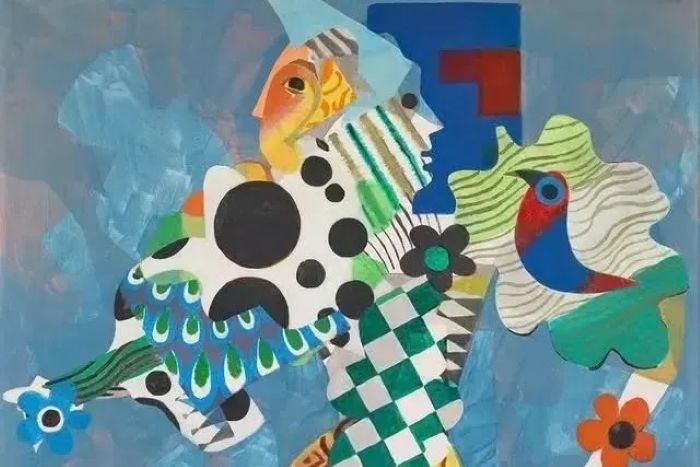
I spent the entire day at the Met and it wasn’t enough. Unsurprisingly, because of the sheer volume of pieces, and beyond that — endlessly more frustrating — because no later than lunch smoke was coming out of my ears. I was exhausted. I had tried to prioritize, to start easy on the second floor, strolling through the European paintings and focusing on the wings I wouldn’t have access to back home. But I got stuck in the drawings before the Europeans even started. I was in front of Matisse’s Jazz series and I couldn’t stop staring at them. Something stopped me dead in my tracks.

The British Spiritual Twilight: On Alan Hollinghurst’s Our Evenings

In Alan Hollinghurst’s lush, symphonic Our Evenings, the arc of history bends toward Brexit. “I have the power. You don’t,” says House Captain Harris, nicknamed “Fash,” as in “Fascist,” one of the many upper-class bullies planted like bridge trolls throughout the life of narrator Dave Win. The political weft of modern history is woven into the coming-of-age story of Hollinghurst’s gay, half-Burmese protagonist. Raised by his white, working-class single mother in an austere market town, Win lives out the arc of a queer British Bildungsroman.

A Novel in the Bardo: On Amie Barrodale’s Trip

I discovered the writing of Amie Barrodale in my college English class while reading an old Los Angeles Review of Books interview with Ottessa Moshfegh, whose short story collection, Homesick for Another World, I’d just read. As my professor lectured to braindead twentysomethings about a medieval Persian poet, I scrolled to the bottom of the page where the interviewer asks Moshfegh if there’s a writer she looks up to, and Moshfegh responds with a recommendation of her friend Amie Barrodale’s story collection, You Are Having a Good Time.

The American Dream-Master: On Thomas Pynchon

Thomas Pynchon returns, let us hope not for the last time, to an America finally besieged by its own Gestapo, Ice also being the surname of the tech-lord villain of his last novel, 2013’s Bleeding Edge. Twelve years on, on my own side of the pond, we endure the resistible rise of our own British-grown wannabe fascists, led by an anti-European whose fake French surname is one vowel shift away from “Nigel Farrago,” a Pynchon-ass moniker if ever there was one. Yes, we know where we are. So forth, as the man himself likes to say.

To Hell With the End of the World: On László Krasznahorkai’s Herscht 07769

In a 2018 interview with the Paris Review, László Krasznahorkai, the recent winner of the Nobel Prize in Literature, claimed to have finished writing novels. A peculiar thing, then, coming out of retirement on a long flat note, with a Kenny G-esque stunt performance of windy and pointless proportion. Herscht 07769, written after the end of his novel-writing career, is remarkable in this regard at least: It manages to snuff out the dark, rich atmosphere of his earliest works in garrulous vapor, thus fulfilling with an ironic vacuity their ominous presaging of annihilation.

Jewish Lightning: On Jason Diamond’s Kaplan’s Plot

When it’s time for lunch, the old men strut naked to the cold showers for a rinse. Their hot, bony feet, arches flattened by the tonnage of fat knees, are somehow immune to athlete’s foot or whatever virus crawls in the bathy fray. Disease lives on the wood slabs of the sauna, in the cracks of broken shower floors, between the toes of barrel-chested men who somehow can’t contract Giardia. Aging bodies roast silently in gold jewelry they refuse to take off, chest hair singeing under six-pointed stars and Chais, little pinkies burning too. Inside these perspiring men are cold operators, and to be shamelessly naked is the Yiddish art of war.

Love Your Darlings: On Thomas Peermohamed Lambert’s Shibboleth

Artists wishing to capture their era face a dilemma. Let too much time pass and run the risk of subject matter losing relevance, especially in today’s hyper-competitive attention economy. Cash in too early, both figuratively and literally, and lose the benefit of hindsight, getting too mired in the trends of the time. I once read that the best World War I literature was published some time after the war ended, that its afflicted generation needed some time to process the tragedy.

Undelivered Glory: On Greg Gerke’s In the Suavity of the Rock

The opening: fraught with menace. A man and his wife and infant daughter are staying in a rented house over the sea in a small Irish town where they are guests for a family wedding. The mood is tense. Wind blows doors shut. The house, the largest in the village, has been commandeered as an informal gathering place for the other guests, who thus intrude on the narrator, a novelist hoping to get some writing done. Eventually, in search of a distraction, the novelist and his wife go for a walk — she with their daughter strapped to her chest.

The Art of Winning (And Losing): On E. Y. Zhao’s Underspin

A few weeks ago, I visited a friend at her family’s house in the Rockaways. The house was painted in the colors of the Sabrett hot dog brand — yellow and blue — and the living room featured a matching bench with a Sabrett umbrella sprouting from the center of the table like a parasitic growth. Children rode their bikes down the street. Mothers walked their little white dogs in synchronized packs. There were about 10 or 11 of us, and we spent the day at the beach reading, drinking, eating. That evening, we gathered on the backyard patio while mosquitoes tore our bare legs to shreds. All conversations eventually funnel into sex or violence or both.

The Whimper After the Bang: On Sayaka Murata’s Vanishing World and Birth Rate Fiction

Sex has always been a public concern for a number of reasons, not least of which is the fact that reproduction tends to require it. Who is having sex with whom? Who is procreating and how many times? No society has ever been indifferent to these questions. Their answers reveal who will hold power, the size and quality of a society’s fighting force, and the agricultural and architectural needs of generations to follow.