The Unrelenting Hoofbeats of the New Literature: On Caleb Caudell’s The Quarrymen

What is the state of American literature today? This loaded question never has an easy answer, and invariably the debate grows tedious, ideological and sociological combatants racing to their predictable corners, fists wearily raised. In my years as a novelist and columnist and now editor-in-chief of this publication, I’ve come to believe that large, conglomerate publishers care less about disgorging excellent literature than they once did — that this pursuit, for a variety of reasons, is less interesting to them.

Colossus: A Novel Excerpt

I slow down in front of the Snowbin residence. It’s Lon, alone, no wife, no family. He was here when I bought Utopia Gardens and I was warned he was fickle. In particular, the old owners, a consortium of bored energy dealers out of Maumee who wanted to dabble in Michigan real estate, had created a quasi-intuitive internal system of red and yellow cards to denote tenants who proved, over time, problematic. Snowbin flitted between red (most severe) and yellow (rather severe) with no discernible rhyme or reason.

The Last Literary Lion of New York, Gay Talese: The Editors’ Interview

It is the rarest of gifts to have lived long enough to survey both a life and a century in its greatest breadth; even rarer still to be both an active participant and shaper of the currents, to have walked alongside the titans of the age and brought them, somehow, to fuller life. This is the shorthand for understanding Gay Talese, and it’s nearly correct: Frank Sinatra and Joe DiMaggio, in two immortalized magazine profiles, will be bound to this boy from Ocean City, New Jersey, forevermore. But Talese will be the first to tell you that “Frank Sinatra Has a Cold” is not his greatest work, nor the one he is most proud of.

The Future of the American Novel: Meditations on What Comes Next

There were surely critics, in the middle of the 1960s, who had no concept of what was to come. The counterculture could feel faddish; so could New Hollywood, sexually explicit novels, baroque pop, and acid rock. If history is a procession from A to B, it must never be forgotten that everyone in every time was living a life in transition, in the eternal present. Retrospective judgment only goes so far. Apprehending the future is inordinately difficult — now, and always. If you’re sure of it, you’re probably wrong. Knowing which way the wind blows is a special sort of art, one few can even start to master.

Indie, Please: On Daniel Falatko’s The Wayback Machine

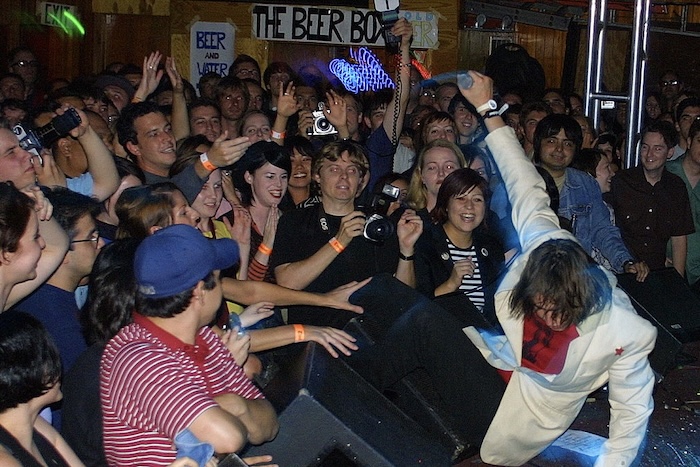
In the late 2000s and early 2010s, I went to many rock shows in Williamsburg and Bushwick. The neighborhoods, like me, were a bit scruffier then. The glass monoliths had not yet swallowed up the waterfront. PBRs were a buck, never more. The men kept their shirts earnestly plaid and their jeans earnestly tight. I was warier of the jeans, fine with the plaid, and let my hair unspool in a billowing halo of curls. My close friend, who actually played in a rock band, favored leather jackets, and so did I. I had no musical talent of my own — an attempt to learn the guitar at seventeen flopped terribly — but I could lose myself in those shows, which were usually illegal.